A trusted source
Begin with instructions reached independently through a verified official domain—not a link in an unsolicited message or search advertisement.
A considered beginning / 01—07
A clear, measured introduction to setting up a hardware wallet—and to the decisions that deserve your attention before you begin.
EXPLORE THE GUIDE ↓THE STARTING POINT 01 / ORIENTATION
Ledger.com/start is a useful place to pause and orient yourself before using a hardware wallet. Setup is not simply a sequence of buttons: it is the moment you establish how a device, its companion software, and your own security habits work together.
A hardware wallet is designed to keep private keys isolated from an internet-connected computer or phone. The device helps you review and approve important actions. It does not remove the need to think carefully, verify details, or protect recovery information.
This independent guide offers general preparation and safety principles. It is not an official Ledger resource and does not replace current instructions supplied with your device or through verified Ledger channels. Product interfaces and supported steps can change, so consult trusted, up-to-date instructions whenever you set up a specific model.
02 / BEFORE YOU BEGIN
Give yourself a quiet moment and gather only what you need. A careful start is less about speed than creating the right conditions.
Begin with instructions reached independently through a verified official domain—not a link in an unsolicited message or search advertisement.
Use a personal computer or phone you trust, with current software and a private, reliable connection.
Choose a place where you can focus without an audience, interruptions, or a camera pointed at your workspace.
Keep an offline writing surface ready if recovery words are provided. Never prepare a digital note for them.
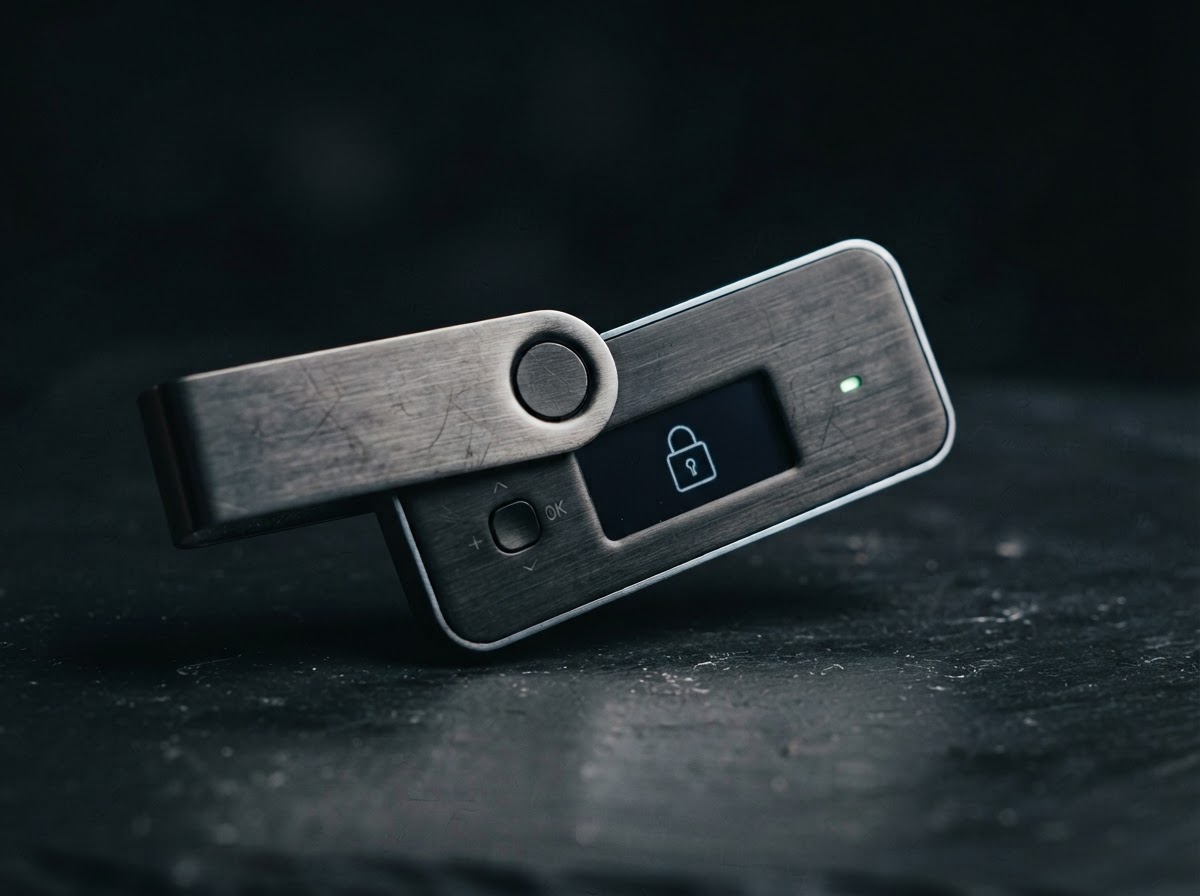 OBJECT STUDY / 02
03 / ESTABLISH A CONNECTION
Install companion software only from a source you have independently verified. Connect your device as directed for its model, and take a moment to understand what the screen is asking before moving forward.
During setup, follow the prompts on the hardware wallet itself as well as those in the companion application. The device display matters: it gives you a separate place to inspect information and approve operations. If a step feels unexpected, stop and return to trusted instructions rather than guessing.
Never let another person guide you into sharing sensitive information, and do not approve a transaction or device prompt you did not initiate. Legitimate troubleshooting should not require you to disclose your recovery phrase.
04 / A MOMENT OF ATTENTION
REVIEW BEFORE CONTINUINGVerification is a habit, not a single box to tick. Slow down whenever identity, ownership, or an action is being established.
05 / SECURITY IS A PRACTICE
A hardware wallet can help protect private keys, but safe use depends on the person holding it. Keep your device under your control, use a strong passphrase or PIN as directed, and treat unexpected contact as a reason to pause.
Be cautious of impersonation, fake support accounts, look-alike websites, and unsolicited requests. No legitimate support representative needs your recovery phrase. Do not enter it into a website, share it in a chat, photograph it, or type it into a connected computer or phone.
For a meaningful change—new device, new software, new request—return to a verified source and review the steps before proceeding. Calm, deliberate verification is one of your strongest safeguards.
06 / RECOVERY INFORMATION
If your setup provides a recovery phrase, it represents a powerful way to restore access to the associated wallet. Anyone who obtains it may be able to access the assets it controls. Treat it like the keys to everything it protects—not like a password you can safely reset.
Write it down exactly as instructed, keep it offline, and store it somewhere private and physically secure. Never share it with anyone, including someone claiming to be support. Avoid cloud storage, email, screenshots, password managers, and any form of digital copy. Do not let another person record or handle it.
If a recovery phrase is already written down before you begin, or appears unexpectedly in packaging or software, stop. A secure setup should not ask you to use a phrase supplied by someone else. Follow the current official guidance for your model and seek verified support without revealing the phrase.
07 / WHEN YOU ARE READY
Before you finish, take one last look at the habits you are taking with you.
I have used trusted, current instructions.
✓I understand what each device prompt is asking.
✓My recovery information is private and offline.
✓I know to stop when something feels wrong.
✓I will never disclose my recovery phrase.
✓Good security is not a rush to finish. It is a set of deliberate choices you can repeat.